
Try the whole edit on a short recording
The useful test is one finished clip. Choose a source with clear speech, open a suggestion, and move the opening until a new viewer knows the subject. Check a name in captions and watch a speaker change. Download the result before deciding whether the workflow fits. Clyps Free includes 30 source minutes, 10 finished minutes, and three exports per month. Free exports have a Clyps watermark and free media expires after seven days. Creator starts at $19 monthly with 300 source minutes, 120 finished minutes, and 60 exports. Paid plans remove the Clyps watermark.
Choose a frame and add a useful cutaway
Use 9:16 for a vertical clip, or keep 16:9, 1:1, or 4:5. Auto follow follows a tracked person; manual framing lets you choose the crop. Optional Pexels stock B-roll can illustrate a sentence while the original speech continues. Clyps exports the file for you to upload through your social account. YouTube link import and external post scheduling are not available.
What makes a passage a usable clip?
A useful clip carries its own context. Listen for a question with a complete answer, a claim with an example, or a story with a payoff. If the opening says “that is why it works,” extend the range until the viewer knows what “it” means. Clyps gives you a starting selection; your review protects the meaning.
From a suggestion to an edited video
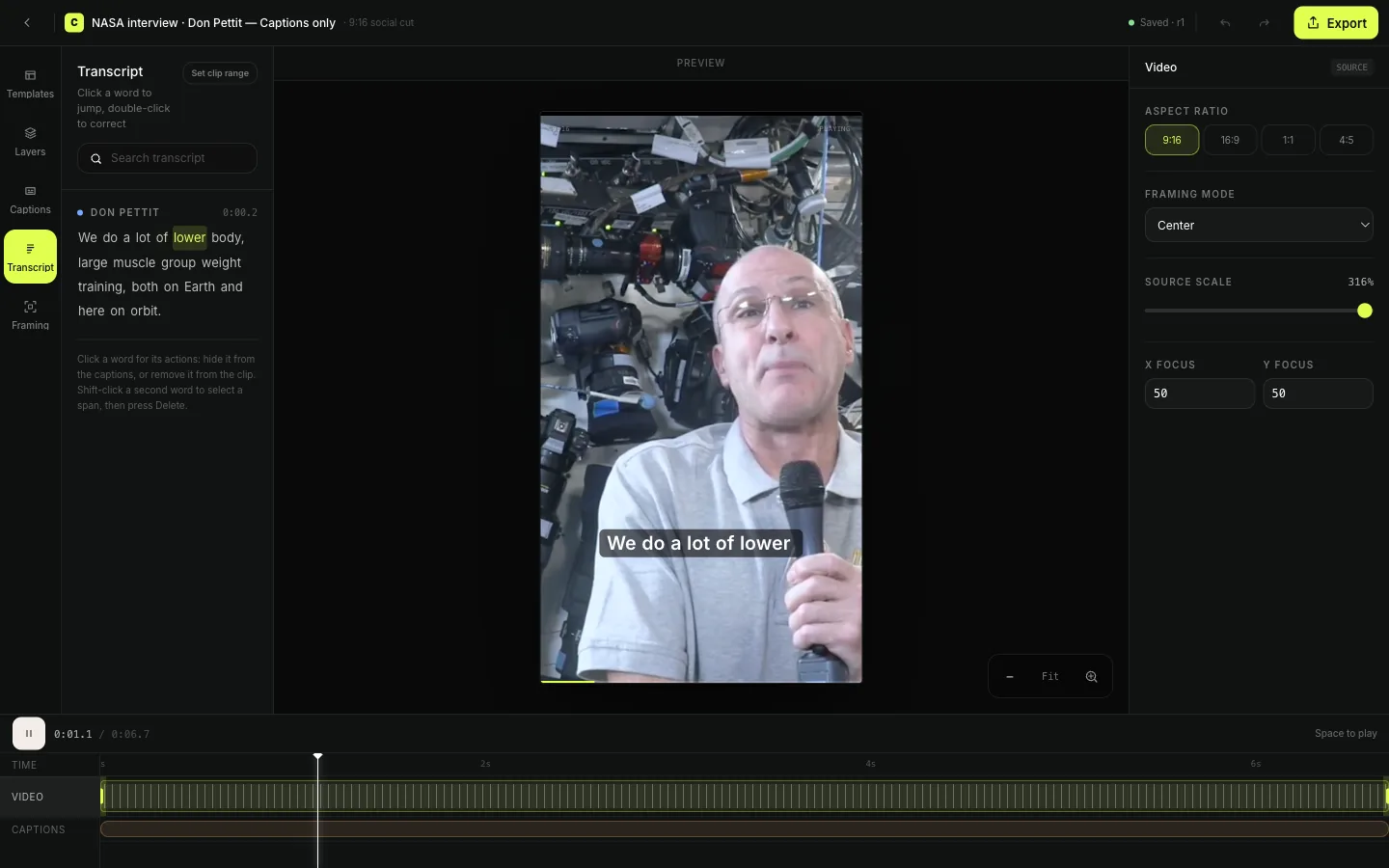
Open a candidate and check the first and last sentence. Adjust the range, correct names in the transcript, and choose the frame that keeps the speaker visible. Preview captions at the size your audience will see them. Export the selected clip as an MP4 when the edit is ready.
Use scores to organize your review
A clip score helps you sort suggestions. It cannot tell you how many views a post will receive. Keep an idea that answers a question your audience actually asks, even if another candidate scores higher. After publishing, compare retention and useful responses across topics to decide what to record next.
Worked example: an answer with a missing subject
Imagine a founder interview where the suggested clip begins, “We stopped doing that after the first month.” The line sounds intriguing, but the viewer cannot identify the decision. Extend the start to include the question about onboarding calls. Keep the founder’s explanation and the example of the change. End after the result, before the conversation moves to hiring. You now have a complete answer about one operational choice. In the caption pass, check the product name and the number of calls mentioned. In the picture pass, verify the guest stays visible when leaning toward the microphone. This is an illustrative editing brief, not a claim about a measured Clyps result.
Why a promising candidate may still need rejection
Some passages cannot become strong clips without material outside their range. A joke may depend on a long story; an apparent recommendation may be a quotation the guest later rejects. Discard those candidates when extending the range makes the excerpt unfocused. Selection is a useful outcome even when you export fewer clips. Keep the source available so you can revisit the surrounding discussion if a viewer questions the context.
Before you export
- The opening identifies the subject without the episode title.
- The selected passage contains the evidence or example behind its claim.
- Names and quantities in captions match the recording.
- The ending preserves any qualification that changes the meaning.
See the edit before you export
AI clip maker questions
- Can I use this AI clip maker for free?
- Clyps Free includes 30 source minutes, 10 finished minutes, and three exports per month. Free exports have a Clyps watermark and free media expires after seven days. Creator starts at $19 monthly with 300 source minutes, 120 finished minutes, and 60 exports. Paid plans remove the Clyps watermark.
- What files does the AI clipper accept?
- Upload MP4, MOV, M4V, or WebM. Keep recordings around 40 minutes or shorter and within the source minutes on your plan. Keep the upload page open until it finishes.
- Is an AI clip generator a text-to-video tool?
- Clyps makes clips from footage you upload. It does not generate a new scene, actor, or voice from a text prompt.
- Can I edit the clips the AI picks?
- Yes. Review the selected range, framing, transcript, and caption appearance in the editor before exporting.