
Turn a long video into a complete Short
Start with your recorded interview, lesson, or commentary. Clyps transcribes the speech and suggests clip ranges with written reasons. Open a candidate, listen to the first and last sentence, and adjust the boundaries. Cut a channel introduction if it delays the idea. Keep enough context for someone who has never seen your channel.
Choose a frame that keeps the point visible
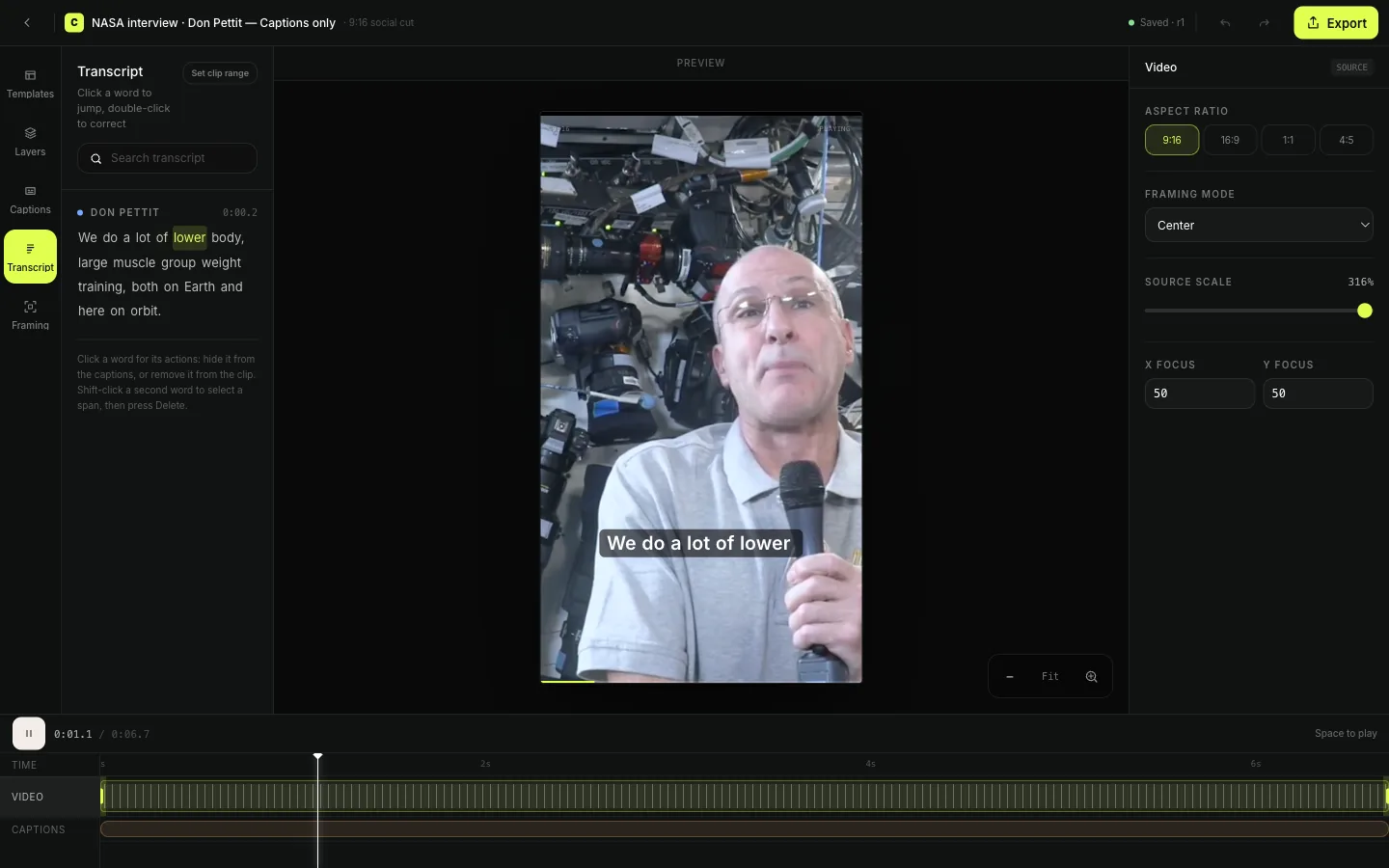
Set the clip to 9:16 for a full-height vertical composition. Use Auto follow for a tracked speaker or split screen for a two-person exchange. Check the whole passage with captions visible. A microphone, whiteboard, or product may need more picture space than the face itself. Move the frame or choose another passage if the useful detail disappears.
Export for the current YouTube Shorts format
A practical starting point is a 1080p, 9:16 H.264 MP4. For standard channels, YouTube currently categorizes square or vertical uploads up to three minutes as Shorts for videos uploaded on or after October 15, 2024. That is an upper limit, not a target. End when the idea is complete. Upload through YouTube and check its preview. Shorts over one minute with an active Content ID claim are blocked globally under YouTube's current guidance.
Worked example: keep the audible comparison
Imagine a longer tutorial that demonstrates how microphone distance changes room sound. Begin at the specific problem, retain the before-and-after audio, and end after the placement advice. Remove the full equipment introduction. Check that the microphone remains visible when the presenter moves it, and place captions away from the object. This illustrative edit gives the viewer one complete lesson. A stock cutaway would hide the evidence at the very moment the audience needs to see it.
Budget for the source and the finished clips
A 20-minute upload uses 20 source minutes. Three one-minute exports total three finished minutes and three exports. That example fits the Clyps Free monthly allowances of 30 source minutes, 10 finished minutes, and three exports. Free exports carry a Clyps watermark and free media expires after seven days. Paid plans remove the Clyps watermark. Check your available allowance before uploading the next recording.
Before you export
- The first sentence makes sense without the long video.
- The demonstration survives the vertical crop.
- Captions are accurate and do not cover the relevant object.
- The export is square or vertical and no longer than three minutes.
- YouTube's upload preview and audio-rights checks are complete.
See the edit before you export
YouTube Shorts maker questions
- Can Clyps turn a YouTube link into Shorts?
- YouTube URL import is not currently available. Upload your original video file to find and edit Shorts. Use footage you own or have permission to republish.
- Can I make a three-minute YouTube Short?
- YouTube currently supports square or vertical Shorts up to three minutes. In Clyps, adjust the clip range to the passage you want, keep it within that limit, and confirm how YouTube classifies it during upload.
- What size should I export?
- Use 9:16 at 1080p for a 1080-by-1920 vertical MP4. Preview the crop, captions, and any inset footage at phone size before publishing.
- Is there a free YouTube Shorts maker plan?
- Clyps Free includes 30 source minutes, 10 finished minutes, and three exports per month. Free exports have a Clyps watermark and free media expires after seven days.
- Does Clyps automatically publish the Short?
- No. Clyps gives you an MP4. Upload it to YouTube, set the title and other publishing details, and review the platform preview yourself.