
Text makes a long recording easier to review
A transcript exposes the structure of a talk: questions, answers, examples, and changes of topic. Review the passages that contain a complete idea, then listen to the video before deciding on a cut. Tone, hesitation, and visual context can change the meaning of words on their own.
Know what the transcript contains
Speech transcription describes what people say. It does not automatically turn slide text, a chart, or a silent demonstration into a written explanation. If a speaker says “look at this number,” the excerpt may need more context than its transcript provides.
Correct the words that will appear on screen
Check the transcript against the source, especially product names and quantities. Then review the selected clip with captions visible. Text that reads well in a document can become crowded on a phone screen, so finish the caption layout at the same time as the frame.
Worked example: finding a complete answer in a recorded talk
A presenter spends several minutes introducing a problem before answering it. Use the timed transcript to identify where the answer begins, then listen to the surrounding section. If the speaker points to a chart while saying “this is the difference,” inspect the picture as well. Select a passage that contains both the subject and the explanation, or preserve the referenced visual in the frame. Correct the transcript for captions only after deciding the excerpt works. This turns text into an aid for editorial review without treating it as a complete record of every visual fact in the recording.
When text alone can mislead the editor
Sarcasm, a quoted statement, or a response to an unseen slide may read differently in isolation. Always return to the source before publishing an excerpt. A transcript is useful for locating material and checking words, but it does not replace listening for tone or watching what the speaker is referring to.
Before you export
- The spoken subject is identifiable in the excerpt.
- Referenced charts or objects are reviewed visually.
- Unfamiliar words are checked against the original audio.
- The output requirement fits an in-editor transcript and captioned clip.
See the edit before you export
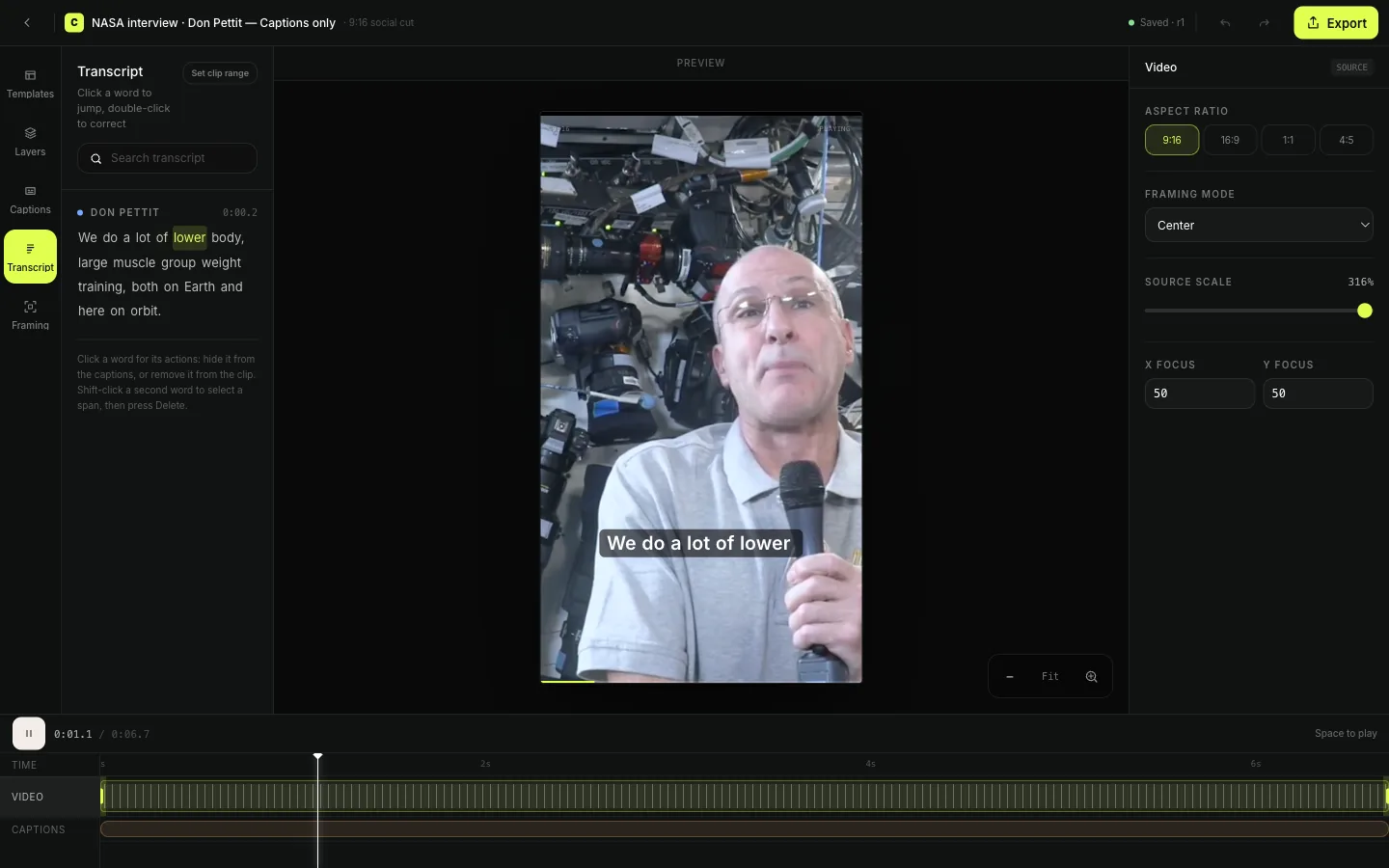
Video to text questions
- Does video to text mean optical character recognition?
- No. This workflow transcribes the spoken audio in the video. It is not a tool for extracting all text visible in an image or slide.
- What is the output of this workflow?
- A reviewed transcript inside the editor and captions on the exported video clip. This page does not offer a standalone document-transcription service.