
Cropping and resizing solve different problems
Cropping removes part of the picture. Resizing changes the output dimensions. Turning a wide recording into a full-height vertical clip involves a composition decision: which part of the wide image stays? Make that decision with the whole passage in view, not just its first frame.
Follow movement through the shot
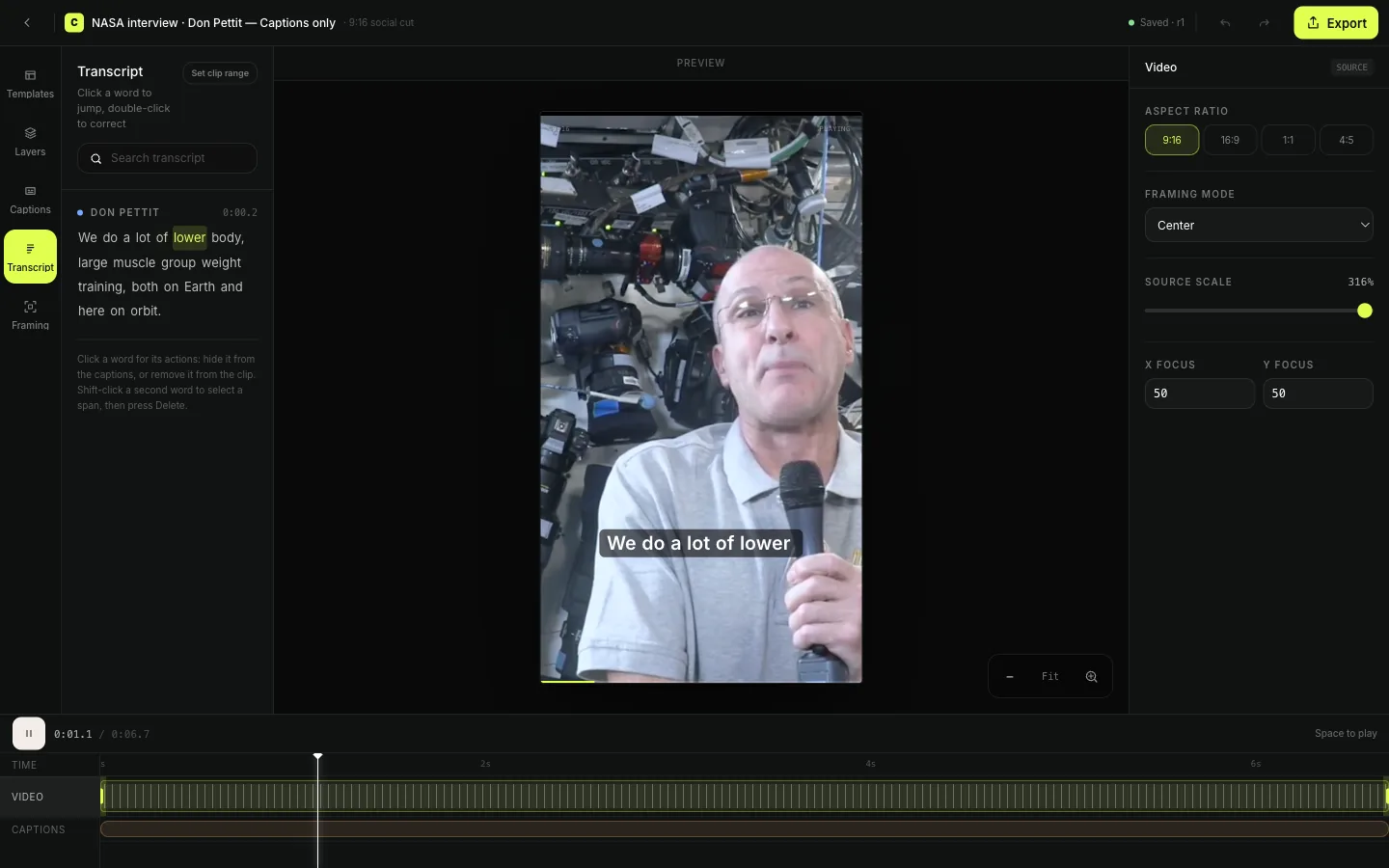
Preview when the subject leans, turns, or brings an object into view. A crop that looks good on a paused face can cut off the demonstration seconds later. Use the available framing controls to adjust the composition, and choose a wider layout when the context matters more than filling a vertical screen.
Place captions after the crop
Once the composition is settled, review captions against the remaining image. Avoid covering a mouth, a product label, or a screen control being explained. Export a test clip and watch the file at the intended viewing size before repeating the treatment on other excerpts.
Worked example: a presenter reaches outside the opening frame
Imagine a landscape interview where the guest starts in the center, then lifts a product from the side of the table. A crop based only on the opening face would hide the product. Preview the passage through that movement and choose a composition that retains the demonstration. If keeping both the guest and object leaves too little room vertically, consider a wider output. Position captions after that decision, leaving the product label clear when it matters. The goal is to preserve the information the viewer is being asked to notice, even if the result uses more of the original frame than your first crop.
What to check when a source is already tightly framed
A close source shot offers little room for another crop. Moving the composition cannot recover a shoulder, hand, or object that was never recorded. Choose a less aggressive crop or a different excerpt. Inspect sharpness in the exported file as well as the preview, because enlarging a small part of the source can make compression and softness more visible.
Before you export
- The full passage has been previewed for subject movement.
- Referenced objects remain visible when mentioned.
- Captions leave the important part of the frame clear.
- The source has enough detail for the chosen crop.
See the edit before you export
Video cropper questions
- Will cropping improve a low-resolution source?
- No. A tighter crop uses fewer source pixels. Start with the highest-quality recording available and inspect the exported result.
- What if two people cannot fit in the crop?
- Use a layout that preserves both people or review Clyps’ split-screen and reframing options instead of forcing a single narrow crop.