
Protect the context of an answer
A short response can sound more certain than the speaker intended when its question is missing. Include the condition or setup that gives the answer its meaning. Watch for qualifications after the proposed endpoint and keep them when they materially change the statement.
Choose what the viewer should see
Some answers work best with attention on the guest. Others depend on a shared reaction or interruption, where seeing both people helps. Review the available framing modes against the actual passage and check every speaker change rather than relying on a single still.
Proof names and quoted claims
Correct the guest’s name, organization, and any technical language in captions. Listen once without reading the transcript, then watch with captions visible. These checks catch different mistakes. Follow your usual guest or client review process before uploading the exported clip.
Worked example: preserving a conditional recommendation
An interviewer asks whether a team should change a process, and the guest answers, “Only when the volume reaches that point.” Starting the clip at “change the process” would make the recommendation sound universal. Keep the condition and enough of the question to define the volume being discussed. Retain the guest’s example, then end after the conclusion. Review the crop during the interviewer’s follow-up so viewers can follow the exchange. In the caption pass, check the numerical threshold and any company names. The finished excerpt should represent the same recommendation the guest made in the full conversation.
When the most dramatic sentence is the wrong cut
A guest may state a position in order to challenge it in the next sentence. Isolating the first statement can reverse their meaning. Listen before and after any striking line and include the correction when necessary. If the passage cannot carry that context within a useful clip, select another answer rather than using an inaccurate teaser.
Before you export
- The question and answer retain the same relationship.
- Conditions and corrections are preserved.
- Speaker changes are understandable in the frame.
- Names, numbers, and quoted claims are proofed.
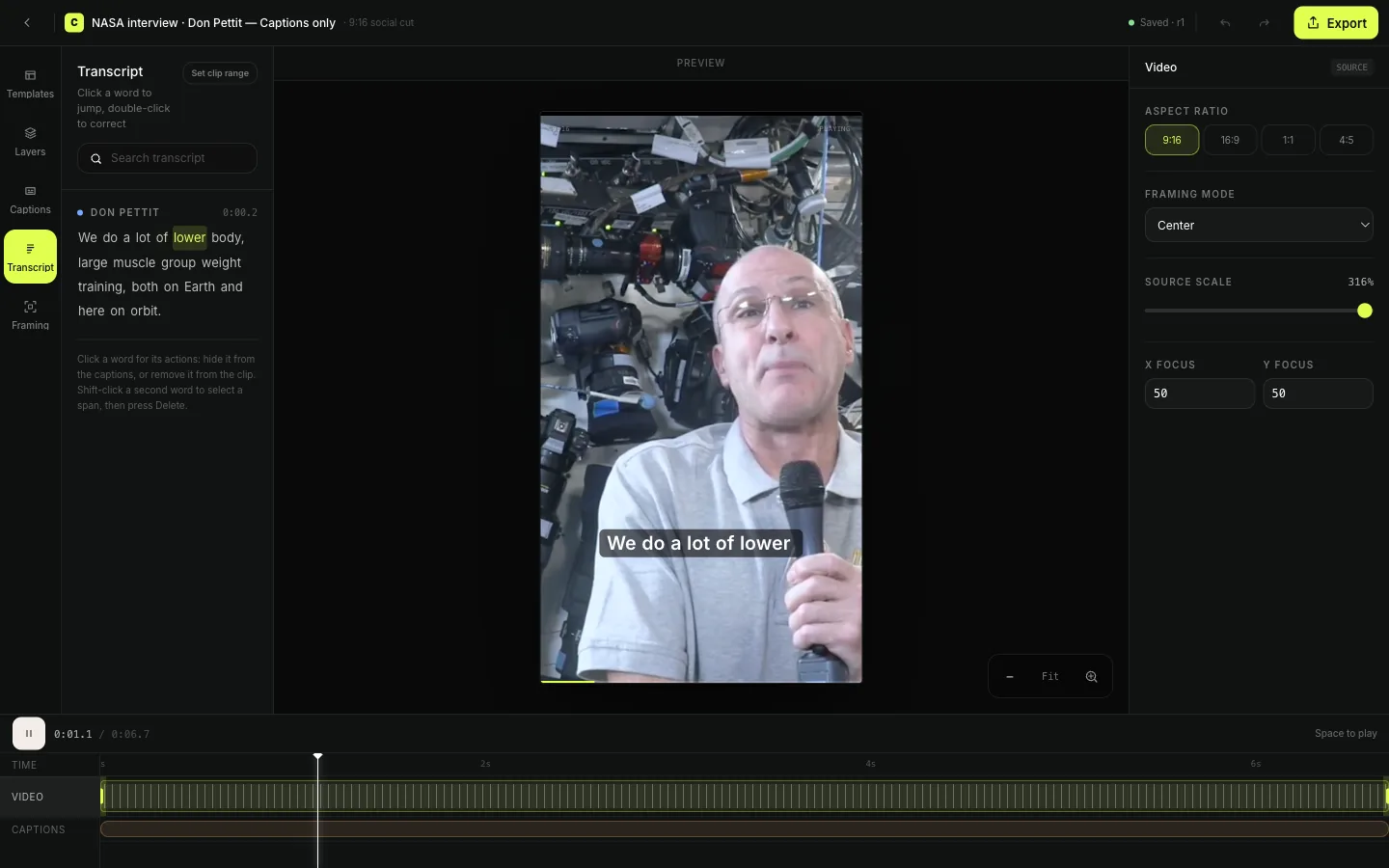
See the edit before you export
Interview clip maker questions
- Can I remove the interviewer’s question?
- Only when the answer still makes sense on its own. Extend the range to keep the question if removing it changes or obscures the meaning.
- Does Clyps handle the guest’s approval?
- This page covers editing and exporting. Keep consent and approval in your established production process.