
A highlight needs a payoff
The loudest reaction is not always the strongest excerpt. Look for a moment where the speaker resolves a question, changes an assumption, or describes a concrete result. Listen beyond the proposed endpoint: the last sentence may contain the qualification that keeps the statement accurate.
Use a simple selection checklist
Can a stranger identify the topic from the opening? Does the passage contain a complete idea? Is the example understandable without a slide from five minutes earlier? Would the speaker recognize the meaning after the cut? Use those questions when reviewing the written reason attached to each candidate.
Finish highlights individually
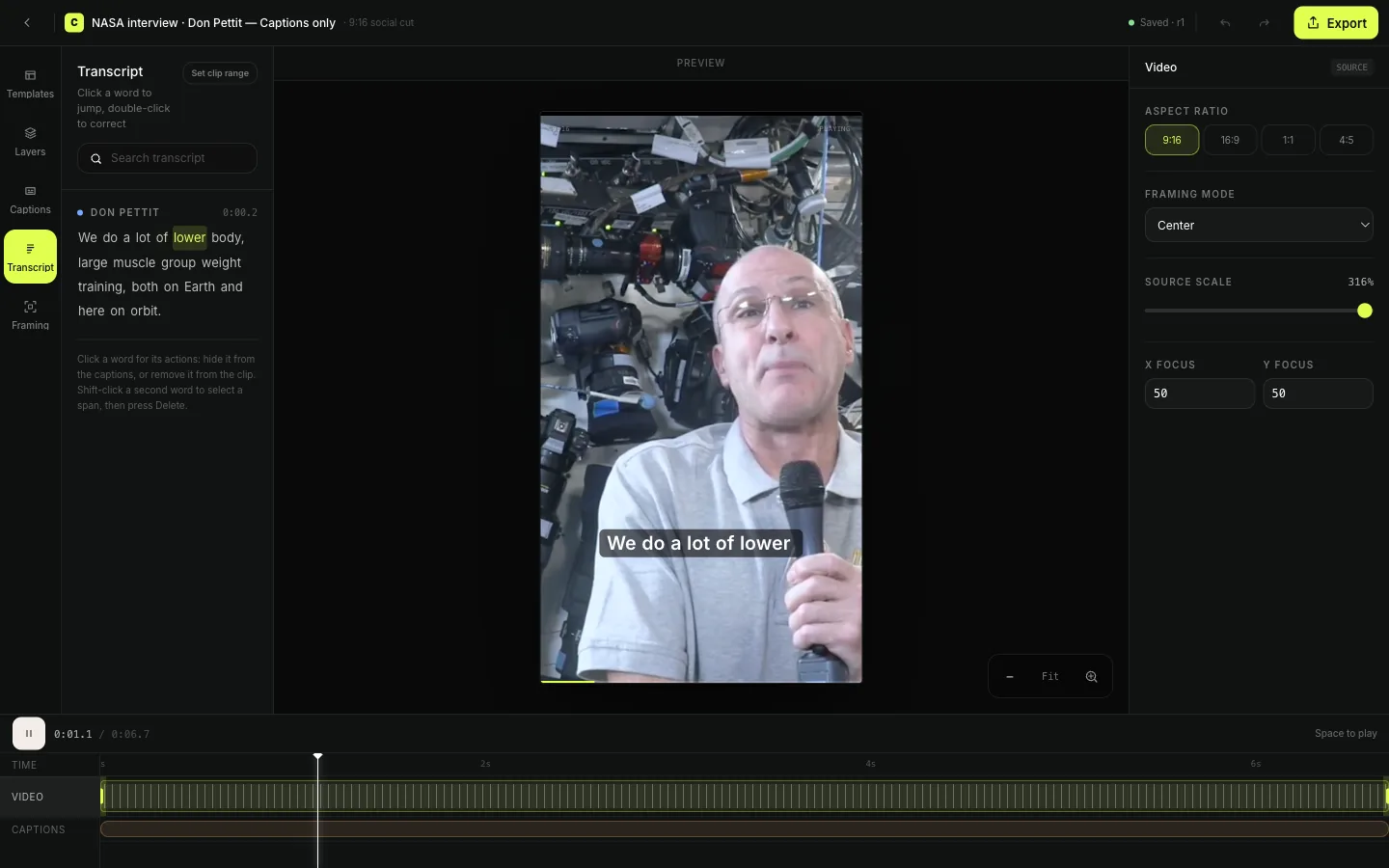
Give each selected passage a framing and caption pass before exporting. Clyps is useful for separate clips from a conversation. A music-led montage that stitches unrelated scenes into one sequence requires a different editing workflow, as does automatic detection of goals or gameplay events.
Worked example: keeping the turning point in a story
Imagine a guest describing an early business mistake. The strongest line is a surprising result, but it needs the preceding decision to explain why it mattered. Start where the guest names that decision, keep the concrete consequence, and include the lesson they drew from it. End before the next anecdote. A reaction from the interviewer may add rhythm if it does not interrupt comprehension. Read the suggested reason as a clue to what makes the passage interesting, then listen to confirm the story actually resolves inside the selected range. Caption the relevant names and numbers carefully so the most memorable details are also accurate.
A highlight reel is not always a set of clips
A montage usually relies on music, sequencing, and transitions between unrelated shots. Separate spoken excerpts rely on complete ideas. Decide which output you need before choosing a workflow. Clyps’ transcript-led clip selection is suited to the latter; do not assume that a strong spoken-content result proves action detection for a match, wedding, or gameplay recording.
Before you export
- The highlight has a setup and payoff.
- The passage still means the same thing outside the full recording.
- Any reaction retained in the edit helps the story.
- The chosen workflow matches spoken excerpts rather than action detection.
See the edit before you export
Highlight video maker questions
- Can Clyps automatically find sports highlights?
- This workflow is based on spoken recordings. Do not rely on it to detect goals, scores, or silent sports action. It can help with a recorded sports interview or commentary discussion.
- Are suggested highlights guaranteed to go viral?
- No. Suggestions help you review material. Reach depends on the content, audience, packaging, and distribution.