
Prepare the saved recording
Export the recording from your streaming workflow and remove long empty sections before uploading when practical. Work in manageable source files for long sessions. Keep the original quality where possible so that reframing does not begin with an already degraded social download.
Translate live context into a complete excerpt
A reply to chat may begin with “yes, absolutely.” Include the spoken question or choose the point where the host restates it. Remove references to a poll, alert, or offscreen message when the resulting clip would leave a new viewer guessing.
Pick the right kind of highlight
Clyps’ spoken-content workflow is useful for commentary, Q&A, interviews, and live lessons. A silent gameplay event or an action-only sports moment needs a different detection approach. Preview the selected passage with its overlay and camera composition before making a vertical version.
Worked example: a chat answer that needs its question
During a saved stream, the host reads a question silently and begins, “There are two reasons.” That opening does not work for someone who cannot see the chat. Look for the point where the host restates the topic, or select a different answer with a spoken question. Keep the explanation and its example, then end before the host responds to a new message. Inspect alerts or overlays that may cover the picture during the excerpt. Prepare the crop around the information that remains visible in the actual recording rather than assuming every part of the live composition can be edited independently.
Do not mistake a recorded stream for a live integration
This workflow begins after you have a saved file. Plan the time needed to obtain and review that recording. It is not a promise of instant capture from a stream or automatic posting while an event is happening. For long sessions, separate the source into manageable recordings so review and processing remain practical.
Before you export
- The passage has a spoken subject independent of live chat.
- Alerts and overlays do not obscure the point.
- The recording is suitable for the spoken-content workflow.
- The exported clip is reviewed outside the original event context.
See the edit before you export
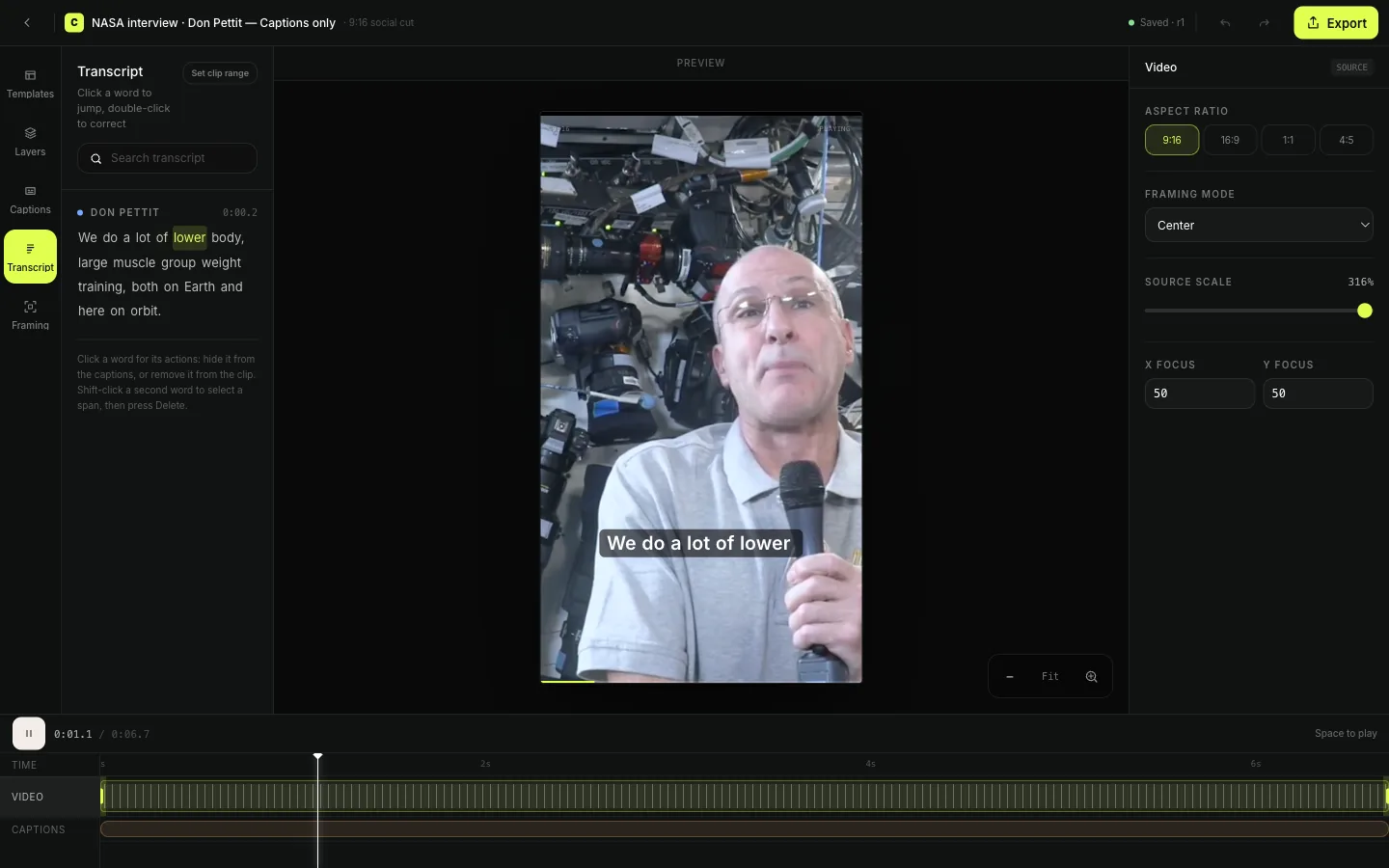
Livestream clip maker questions
- Does Clyps clip a stream while it is live?
- This workflow starts from a saved video file. It does not promise real-time clipping or a direct streaming-platform connection.
- Can I turn a Twitch recording into TikTok clips?
- Use a recording you have permission to republish, select suitable spoken passages, and export a vertical edit for uploading to TikTok.