
Turn one source into several useful deliverables
Upload the recording, review the suggested passages, and choose distinct answers. Finish each clip in the editor, then download an MP4 for its destination. A customer setup answer may need a wide screen view; an interview introduction may work vertically. Clyps supports 9:16, 16:9, 1:1, and 4:5. It does not write a blog post from the recording or manage your publishing calendar.
Compare a clipper with a social management tool
Choose Clyps when you need to select and finish video excerpts. If the work is creating a month of posts, approving a calendar, or scheduling across accounts, compare that workflow separately. The number of videos exported is only one part of the job. Keep the recording name and destination with each download so the person posting it knows what to use.
Start with one source and a small set of clips
Clyps Free includes 30 source minutes, 10 finished minutes, and three exports per month. Free exports have a Clyps watermark and free media expires after seven days. Creator starts at $19 monthly with 300 source minutes, 120 finished minutes, and 60 exports. Paid plans remove the Clyps watermark.
Map ideas to audiences
Start with the questions your recording answers. A customer conversation may contain a buying concern, a practical setup tip, and a useful mistake to avoid. Those can serve different audiences. Select an excerpt for each job instead of uploading the same broad summary everywhere.
Change the packaging with the destination
Choose a frame and caption treatment that fit the placement. A demonstration for an existing customer may need more visible screen context than a vertical introduction for a new viewer. Keep the original meaning while adapting the opening and composition to what the audience already knows.
Build a feedback loop after publishing
Record which topic each clip covers and what happened after publication. Useful responses, completion, and visits to the relevant next step tell you different things. Feed that evidence into the next recording brief. A larger pile of clips is only useful if it helps you answer real audience questions.
Worked example: three jobs inside one customer conversation
A customer recording may explain why the team changed tools, how they set up the new workflow, and what they would do differently next time. The buying decision can help a prospect; the setup answer can help an existing customer; the lesson learned can support a broader educational post. Select a complete passage for each job and choose its destination accordingly. Keep the customer’s exact qualifications and proof any named figures. In your publishing notes, record the topic and next step for each export. This makes the set useful even if the clips differ in length, shape, and caption treatment.
Avoid measuring success only by output count
Ten similar excerpts can create more review work without providing ten useful ideas. Track which questions each clip answers and whether the audience takes the relevant next step. A small set of clear, different answers is easier to learn from than a large batch whose topics overlap so much that you cannot tell what worked.
Before you export
- Every clip has a distinct audience question.
- The selected passage contains enough evidence or explanation.
- The destination and next step match the topic.
- Post-publication results can be traced back to the clip’s idea.
See the edit before you export
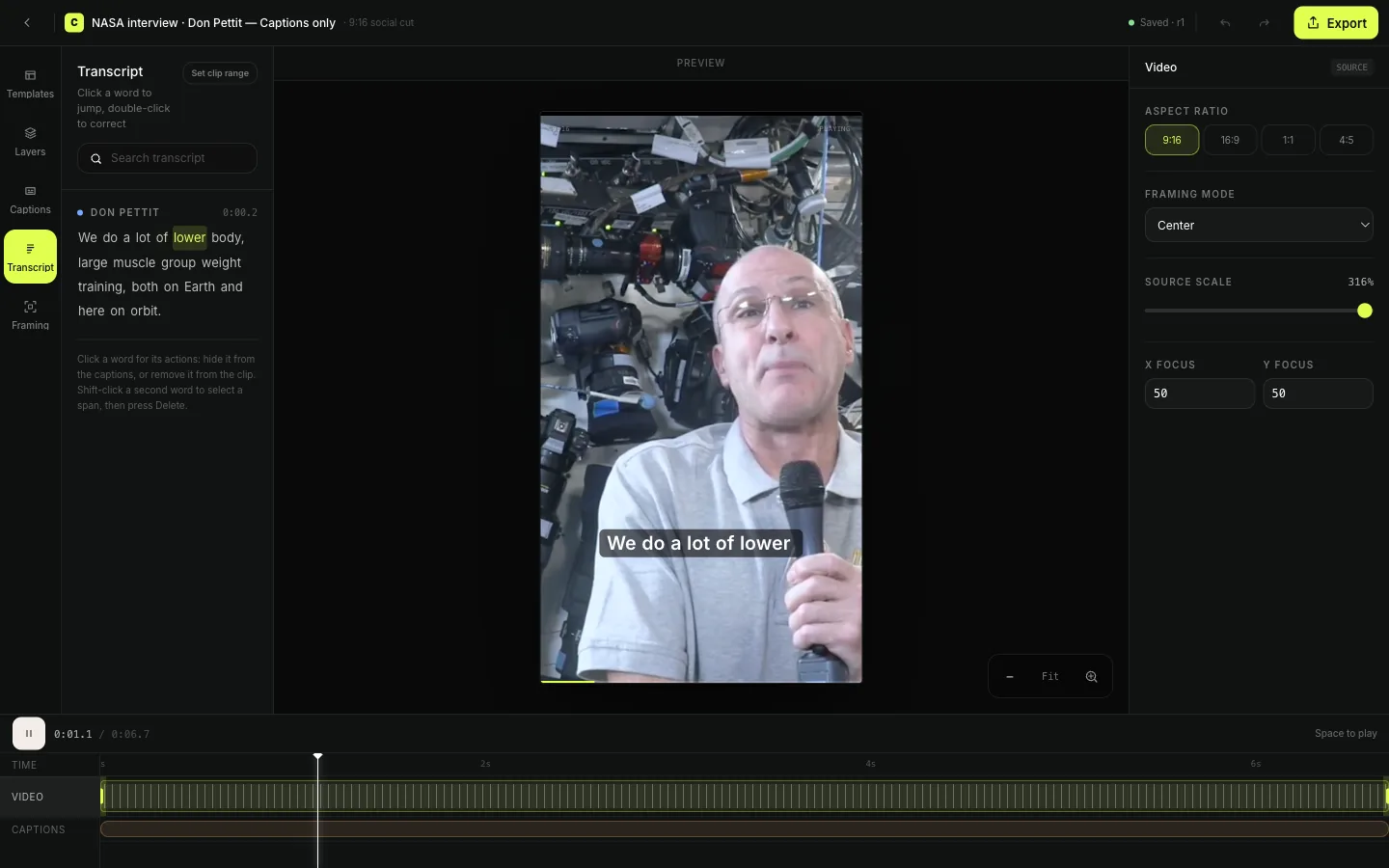
Video repurposing questions
- Can I repurpose an existing YouTube video?
- Use your original video file or a recording you have permission to edit. Clyps does not currently fetch a YouTube URL. Upload the source file, choose excerpts, and export files for your destination accounts.
- Does Clyps publish repurposed videos for me?
- No. Download each finished MP4 and use the destination platform or your existing scheduler to publish it.
- How many clips should I make from one recording?
- Keep as many complete, useful ideas as the recording contains. Do not stretch a weak passage into another clip simply to reach a count.
- Can I use this for several social platforms?
- Yes. Export edited files in the appropriate shapes and manage publishing through the destination platforms.