
Lead with a practical point
Choose a passage that explains a decision, tradeoff, or mistake someone in your field recognizes. Keep the example that supports it. A concrete explanation of why a process changed is more useful than an isolated statement that a product is “transformative.”
Choose a readable feed composition
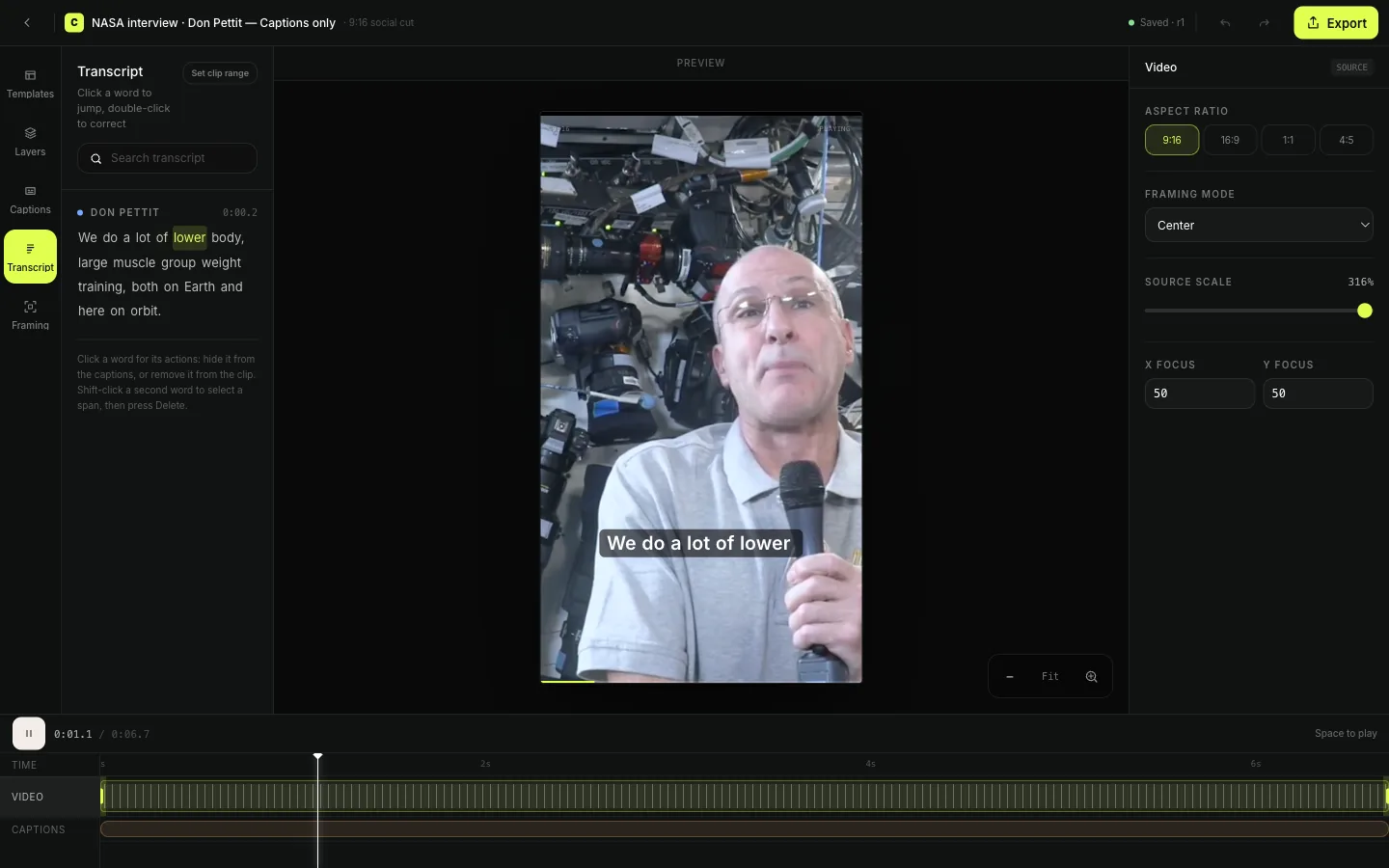
A square or tall feed shape can preserve useful room around a speaker. Landscape can suit a detailed demonstration. Preview captions and any screen text at feed size, then inspect the upload preview because the destination interface affects how the video appears.
Make the accompanying post specific
Export the clip and write a post that names the problem it addresses. Add context that the excerpt could not reasonably carry, such as the audience or use case for the advice. Use a next step that follows the topic instead of a general pitch unrelated to what the speaker explains.
Worked example: explaining a business tradeoff
A founder interview contains a discussion of why the company reduced the number of onboarding steps. Keep the problem, the change, and the tradeoff in the excerpt. Do not isolate a claimed improvement without the condition that follows it. Choose a feed composition that preserves the speaker and any relevant demonstration, then proof the product terms in captions. When publishing on LinkedIn, explain which kind of team the lesson applies to and point toward a relevant resource if there is one. The clip becomes a concrete professional observation, rather than a broad promotional statement that could describe any company.
When a customer claim needs more context
A result can depend on a specific team size, time period, or workflow. Keep those details when they are material, and do not turn an individual experience into a guaranteed outcome. Use the post to supply context the short excerpt cannot carry naturally. The captions should still represent the actual source speech.
Before you export
- The excerpt states a concrete professional problem.
- A claim retains its important conditions.
- Screen details and captions are readable in the feed preview.
- The accompanying post identifies the intended audience.
See the edit before you export
LinkedIn video maker questions
- Does Clyps post directly to LinkedIn?
- This workflow produces an MP4 for you to upload and publish through LinkedIn.
- Which recordings are useful for this?
- Expert interviews, customer conversations, webinars, and product explanations can work when the selected passage contains a complete, relevant point.