
Keep the problem and result in the same excerpt
Select a passage that names the task, demonstrates the relevant action, and shows the outcome. An isolated feature name is less useful than seeing why a person would use it. Remove unrelated navigation only when the remaining sequence still explains how the task works.
Protect the screen detail
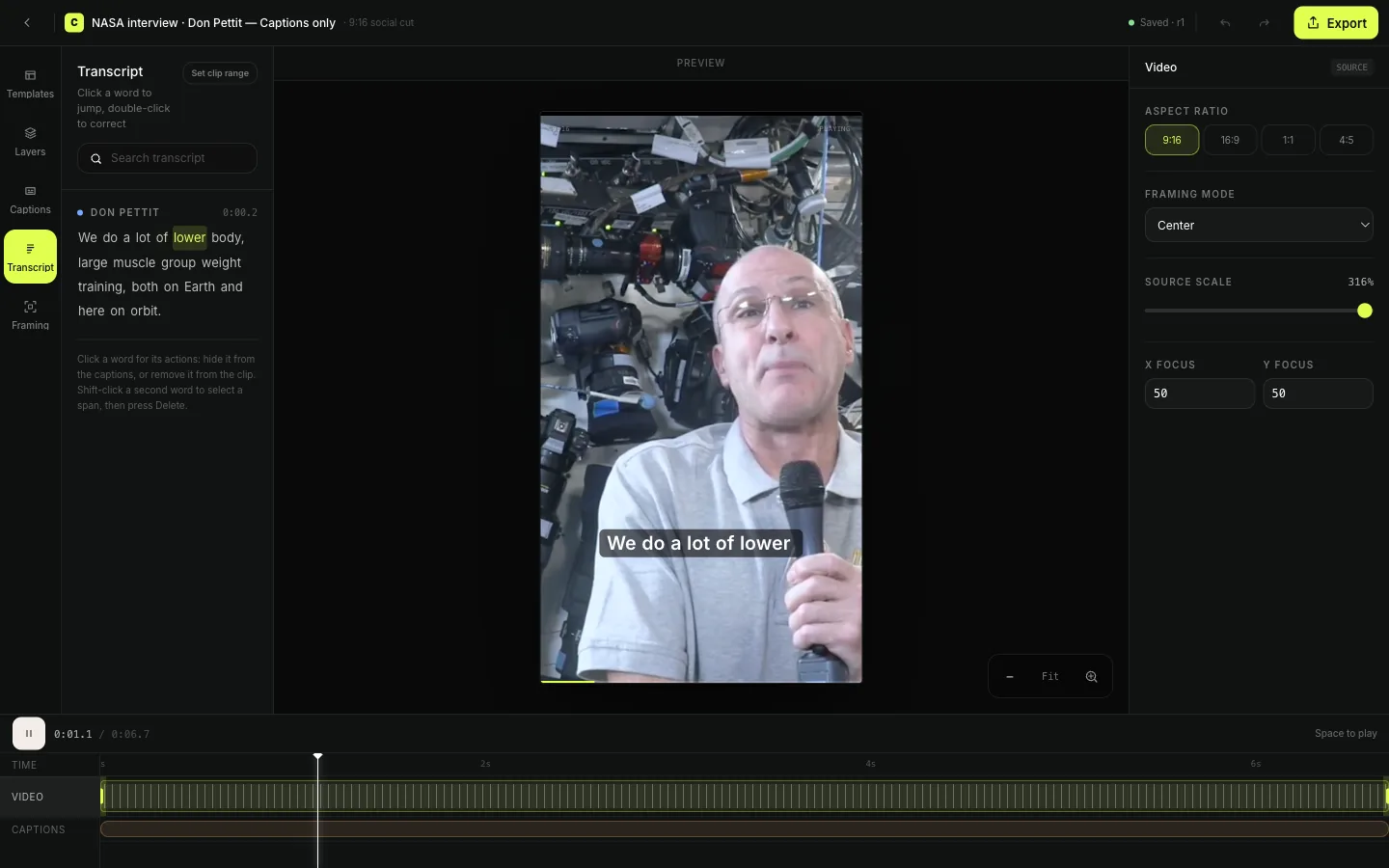
A vertical face crop may hide the control the speaker is describing. Review the whole frame before choosing a shape and keep a wider composition when the interface needs it. Preview at a small size to check that labels and results remain readable.
Match captions to the current product
Proof feature names against the interface in the recording. If the product has changed, choose an up-to-date source instead of using captions to disguise an outdated demonstration. Export the clip and connect it to the relevant help article or product page when you publish.
Worked example: one task from a broad walkthrough
A product recording covers setup, collaboration, and reporting. Choose the passage where the presenter shows how to invite a teammate. Keep the starting location, the relevant action, and the confirmation so a viewer can understand the whole task. Inspect whether the interface labels survive a vertical crop; use a wider composition if needed. Correct feature names in the captions and check that the recorded interface still matches the current product. After export, connect the clip to the corresponding help page rather than a general homepage when that better serves the viewer’s question.
Avoid using visual polish to hide an outdated workflow
A polished clip of a removed menu or renamed feature can create support work. Compare the recording with the current product before publishing. If the steps changed materially, make a new source recording. Caption edits can correct a transcription error, but they cannot make an outdated sequence of visible actions accurate.
Before you export
- The excerpt shows the task’s starting point and result.
- The relevant interface remains readable.
- Feature names match the current product.
- The published next step helps complete the same task.
See the edit before you export
Product demo clips questions
- Will Clyps record my screen?
- This page covers editing an existing product recording. Use your screen-recording workflow to create the source video first.
- Can I make vertical product clips?
- Yes, when the relevant information survives the crop. Use a wider format if the demonstration depends on a detailed interface.