
Start with the spoken message
Upload the saved video of the sermon or talk. If your service recording also contains music and announcements, prepare a file of the spoken message first. Keep recordings around 40 minutes or shorter and within your plan allowance. Clyps transcribes speech and suggests passages; it does not judge the theology or choose what your community should hear.
Finish a clip for the church account
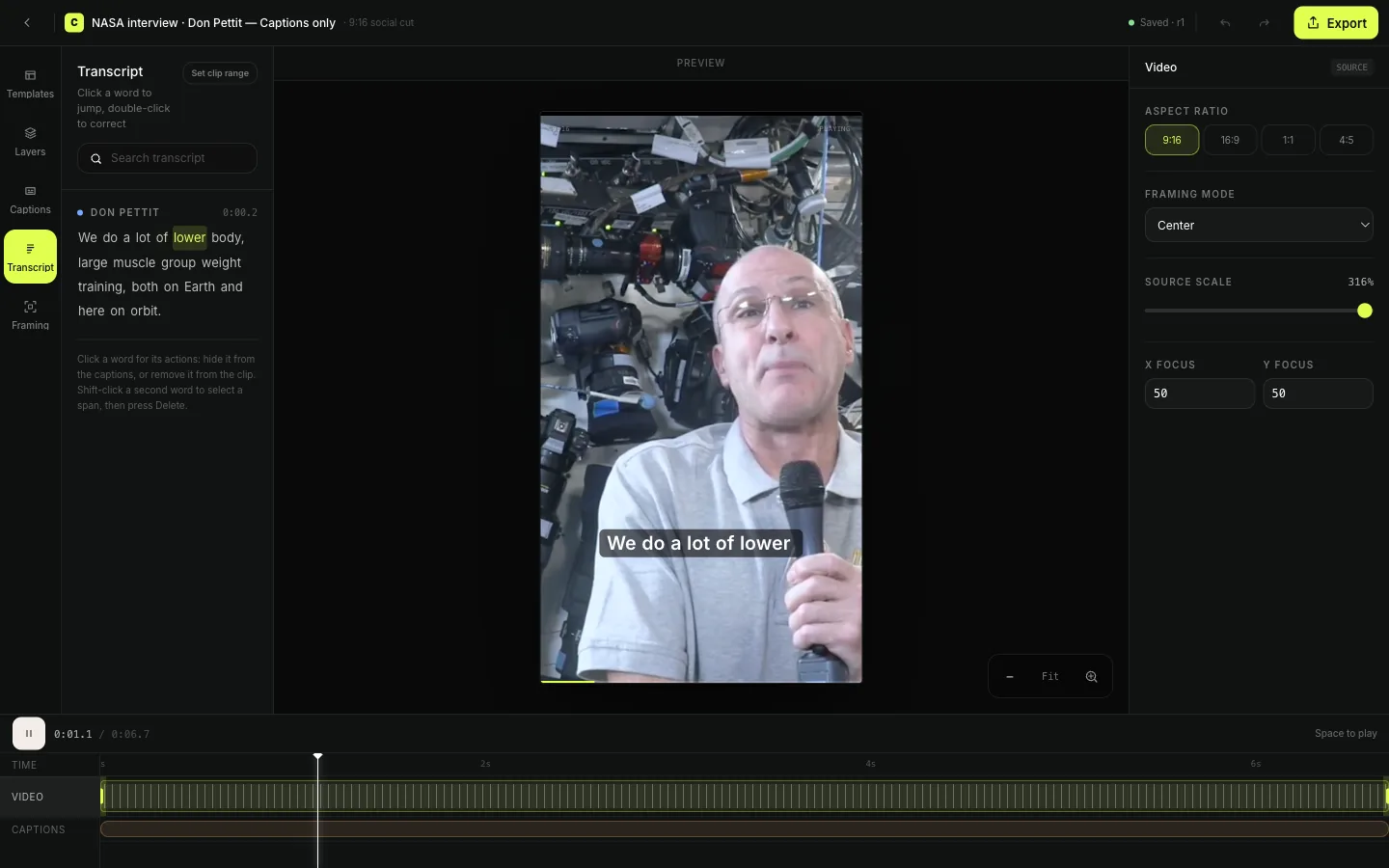
Open a candidate and listen to the surrounding passage. Correct names and references in the captions, choose a vertical or landscape frame, and preview the cut. Download the MP4 and publish it through your usual account. Add the full message link there. Clyps does not schedule posts or import livestream links.
Try a short message before choosing a plan
Clyps Free includes 30 source minutes, 10 finished minutes, and three exports per month. Free exports have a Clyps watermark and free media expires after seven days. Creator starts at $19 monthly with 300 source minutes, 120 finished minutes, and 60 exports. Paid plans remove the Clyps watermark.
Keep quotations and explanation together
A passage may include a quotation followed by the speaker’s interpretation or qualification. Listen around the proposed range so the excerpt does not merge those voices or leave a quotation unexplained. Include the reference when a new viewer needs it to understand the point.
Review the room and camera changes
Recorded talks can include a wide stage view, a close shot, and audience cutaways. Check the whole excerpt when reframing for vertical video. Keep gestures and any referenced visual material visible, or choose a composition that preserves the context.
Proof the words before sharing
Check names, references, and quoted text against the audio. Captions should represent what was spoken rather than silently correcting or expanding the message. Export the clip and provide the connection to the full recording in your publishing workflow for viewers who want the complete context.
Worked example: keeping a quoted passage and its explanation
A recorded message includes a quotation, a reference, and an explanation of how the speaker understands it. Begin early enough to distinguish the quotation from the speaker’s own words. Keep the part of the explanation that resolves the point instead of ending at a striking but ambiguous sentence. Review the camera changes and preserve any referenced visual. Proof names and references in the captions against the audio. When publishing the export, include a connection to the full message so a viewer can hear the surrounding discussion. This gives the short excerpt a clear relationship to the recording it came from.
When a passage depends on a longer argument
Some statements make sense only after several minutes of explanation. Extending the range may reveal that the material is better shared as a longer recording. Choose a more self-contained thought for a short clip instead of isolating a line that could reverse the speaker’s meaning. The goal is an accurate excerpt, not a dramatic quotation at any cost.
Before you export
- Quotations and the speaker’s explanation remain distinguishable.
- References and names are checked.
- The cut preserves the larger point of the passage.
- Viewers can find the complete recording through the publishing context.
See the edit before you export
Sermon clips questions
- Does Clyps work for church social media teams?
- Yes, when the job is editing a recorded spoken message into clips. You choose the excerpt and download an MP4. Keep review, permission to share, and account publishing in your existing church workflow.
- Is there a free sermon clip maker plan?
- Clyps Free includes 30 source minutes, 10 finished minutes, and three exports per month. Free exports have a Clyps watermark and free media expires after seven days. Creator starts at $19 monthly with 300 source minutes, 120 finished minutes, and 60 exports. Paid plans remove the Clyps watermark.
- Can this create clips from a livestream recording?
- Yes. Use the saved video file and select spoken passages that make sense outside the live service.
- Does Clyps create a new sermon or voiceover?
- No. This workflow edits an existing recording and its transcript-based captions.